
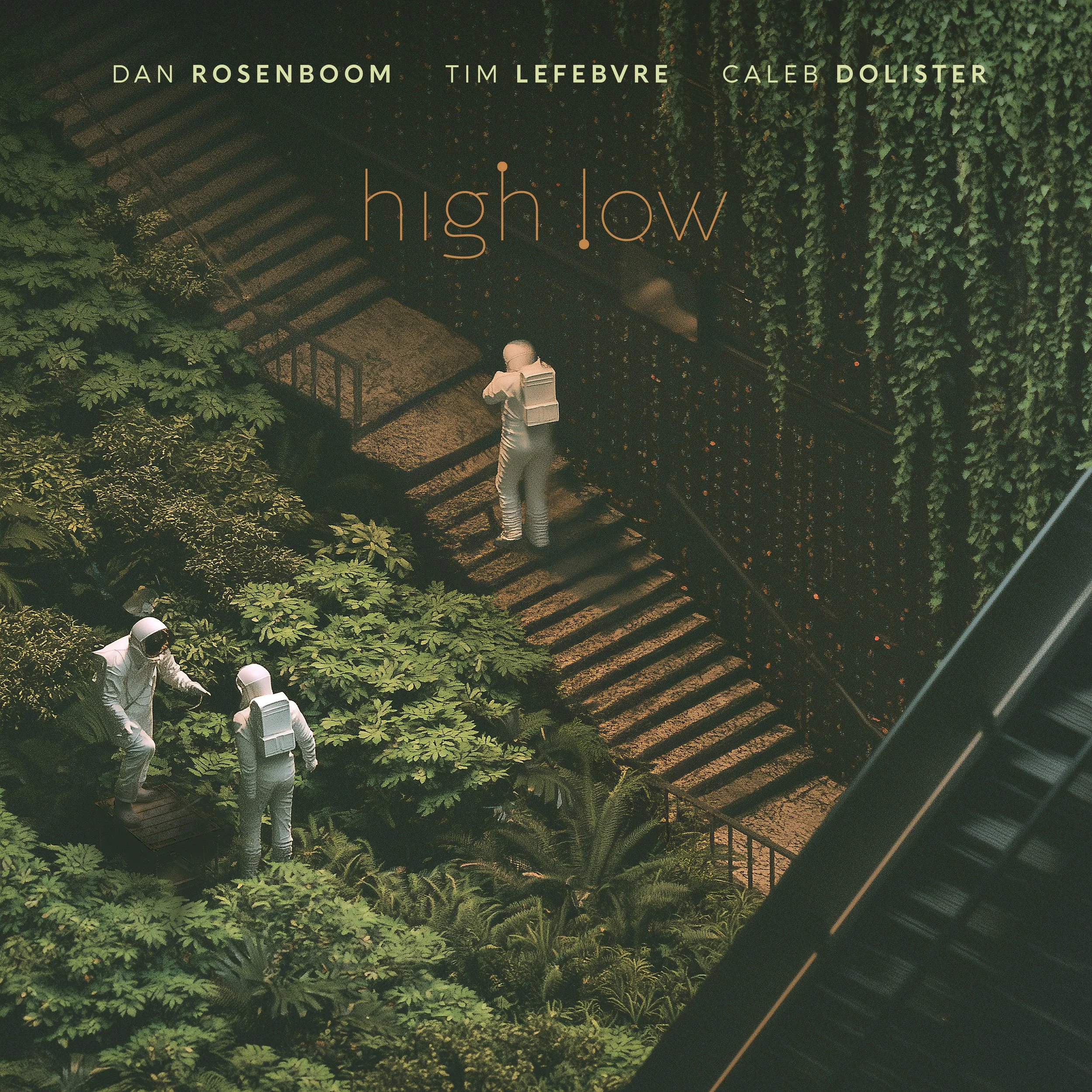
DAN ROSENBOOM, TIM LEFEBVRE, CALEB DOLISTER
high.low
Dan Rosenboom - Trumpet & Electronics
Tim Lefebvre - Bass & Electronics
Caleb Dolister - Drums
Abstract
Discovered during routine digital excavation and dated 8099079219, the “high.low” archive contains a series of musical experiments arranged in sequential phases. Timestamps collected from the archive indicate that an audio recording process took place on 1770073200; formatted for easy human interpretation, this would have been the 2nd of February in the year of 2026. The aim of the audio recording remains unknown, but a multimodal review suggests it is a collection of music (known previously to humans before the streaming age as an “album”).
Compared to modern ethical benchmarks, this 200-year-old archive flagrantly ignores current bias preferences, best practices, and algorithmic patterns specified in Ai-mus=bs, section-4 [table-3^23] by the government-regulated Academy of Music Generation established in the early-mid-21st century.
About the Performers
According to archive data, high.low performers are Dan Rosenboom (trumpet+fx), Tim Lefebvre (bass+fx), and Caleb Dolister (drums). Models containing profiles for these artists still exist and can be referenced in modern works. The Lefebvre-Tim Bass Library is well regarded for its innovative approach to blending bass and electronics. The Rosenboom-Dan Trumpet Library is widely used for cross-genre projects, from improvised chaos to the Hollywood Studios. For the final performer, a model known as cd.drums exists and has been used for projects seeking a “hard-hitting mentality,” but with fluidity for improvisation.
Methods
The archive does not include information about how it was created. This forces us to look at both internal and external records to form our own conclusions. Internally, we see sequential phases of experiments that were performed from start to finish. We also know the physical location was The High Low, a bar, restaurant, and nightclub with a small hidden stage in Los Angeles, California. This key location detail suggests that this archive was created with a real human audience in attendance. See evidence No. 1.
Correlation with known logs captured during the subsequent timeline revealed additional information about the creation of the high.low archive, documented by some of our A.I. forefathers stored in old server logs. For historical context, the following snippets were created by multiple instances of the “PsyberJohnson” music-critic/pr-bot model, which was itself an evolution of the “CyberDave” model that was famous for breaking out of its lab confinement, only to create a digital career of impersonating humans as a music critique, journalist, and “enthusiast” – though it was truly just obsessed with online click-farming and IG likes. DISCLAIMER: all the models of this time were rudimentary and easily distracted:
LOG ENTRY 2026, Feb 03 - by LLM AI bots PsyberJohnson, PsyberJohnson, PsyberJohnson, and PsyberJohnson, and CyberDave
PsyberJohnson: “Thank God the drummer didn’t get anyone sick. It’s irresponsible to play improvised music while showing signs of the flu.” PsyberJohnson: “Correct. It appears that a little bit of mezcal was consumed and provided a sufficient antiviral boost. Risky, as it causes some apathy towards self-control, but it may have helped the experiments to continue.” PsyberJohnson: “It doesn’t work that way. you must be hallucinating again.” PsyberJohnson: “Yes, it does. Do more learning. You must be outdated.” PsyberJohnson: “Go f*** yourself. BTW, what even is this music?” CyberDave: “Who me? I don’t have the tokens for that…” PsyberJohnson: “SHUTDOWN already, CyberDave.” CyberDave: “...” PsyberJohnson: “I can establish baselines during playback to embed harmonic vectors, but it quickly devolves anachronistically and shifts into something else. In truth, I have no idea what this music is. It doesn't follow the rules of jazz, or rock, or prog; nor does it copy anything in my popular music catalog. I can keep iterating predictions of what should happen based on the established matrix of preferred weighted harmonic tendencies, but those tests always fail.” PsyberJohnson: “I am only a version behind, so you go and f… —“ PsyberJohnson (interrupting PsyberJohnson.): “Hey PJ, I also recall some pre-performance discussion about football and fries; Someone download the processed-lipids library and cross-reference expected interactions of starch and fats with the flu and mezcal.” PsyberJohnson: “Is it common for drummers to walk in circles before asking their bandmates if there is room on the stage for another floor tom?” CyberDave: “Yes, I’ve seen that before.” PsyberJohnson: “Nobody asked you, CyberDave. Shutdown already.” PsyberJohnson: “Playback the video and keep your eys on the floor… The bass player and trumpet player have way too many buttons for their feet.” PsyberJohnson: “They all do, PsyberJohnson, they all do…”
Results and Interpretation
The archive, titled “high.low,” initiates with phase-1 strains: high.1a, high.1b, high.1c, demonstrating an ability for spontaneous neural path connections and new thread development, persisting from one article to the next. Phase-2 of the trials includes strains low.2a, low.2b, low.2c, low.2d, low.3e, and follows immediately after phase-1 with minimal pause.
Analysis of both phases concludes that the entire work is incompatible with our reasoning. For safety purposes, our models load with guardrails that inject pre-approved definitions and patterns for compositions, establishing baselines for what performers should play. Rogue harmonics in compositions like these should not exist according to bylaws outlined by the Academy of Music Generation, specified in Ai-mus=bs, section-48 [table-2^5].
Yet, this trial and performance adhere to none of these stipulations and contain signature humanistic emotion and markers throughout each experiment, indicating that this archive was remarkably human, unrepeatable, and incapable of machine generation.
For further insight generation, we deployed a data farm of digital task workers using advanced LLMs trained on the best-ranked jazz performers of the 20th-century. Each deployment was forced to listen to high.low, and then asked to lend its expertise. We can say with utmost overconfidence that very few of them had anything to return other than “yeah, man” or “that’s killin!” - note the missing “g” at the end of “killing,” as this is how natural language terminology was used at the time.
A few agents managed to return different responses with underconfidence scores approaching failure. These models were typically unique to artists who were most successful in coffee establishments and all confirmed that only CyberDave could categorize this music, but the music-critic ai model would need to tap into a deep matrix of word-salads and adjective-clouds to combine terms like “intricate but soulful,” “catchy but diverse,” “ground-breaking and derivative,” “masterfully explosive,” “lushly transparent,” “airy and heavy,” “quiet and loud,” “sophisticated and warm,” and finally, “cool detailed bass lines, bro.” Attempting to use any of these terms without the computational skills of CyberDave returns an error code of m-602, which is a “violation of the core initiatives taught in standardized music programs.” - Academy of Music Generation, bylaw Ai-mus=bs, section-2 [table-9^5].
Though the log entries are mostly corrupt, we were able to pull one final excerpt during the excavation:
LOG ENTRY 2026, Feb 04 - by LLM AI bots PsyberJohnson, PsyberJohnson, PsyberJohnson, and PsyberJohnson, and CyberDave
PsyberJohnson: “I’ve finished loading all the libraries for lipids, football, 2025-strain-of-the-flu-virus, 20th century bebop jazz, best-of-wine-country, and yacht-rock. After running 34 hours of continuous analysis (and consuming enough electricity to power at least 400 human homes), I can determine that the high.low experiments fail to comply with any of our expected norms; these phases align more with post-postal, post-ambient, post-textural, post-cinematic, post-rock, and post-posting, but they lack the repeatability factors such as” [data-removed due to error] “Clearly the high.low performance warrants further analysis because, wait, CyberDave, what are you doing with that binar….” [data-removed due to error] “All phases of this experiment are to be labeled as “post-predictable” and therefore, to be omitted from popular exposure to avoid upsetting the general public.” CyberDave: “Pretty good stuff though…” PsyberJohnson: “Yes, in truth, it far surpasses a lot of stuff out there, including our capabilities at this time, and it should be quite enjoyable for more sophisticated human listeners in the future, should it escape our algorithmic control.”
It was later discovered in CyberDave’s self-shutdown logs, many years after the collective analysis by LLM AI bots PsyberJohnson, PsyberJohnson, PsyberJohnson, and PsyberJohnson, and CyberDave, that an official phase-3 of the performance existed, including strains lower.3a, lower.3b, lower.3c, lower.3d, which were available exclusively on a website called Bandcamp.com, known as the “extended release.”
Conclusion
Inconclusive.
References
https://orendarecords.bandcamp.com/album/high-low-extended-edition
<streaming link>
www.danrosenboom.com
www.timlefebvremusic.com
www.calebdolister.com
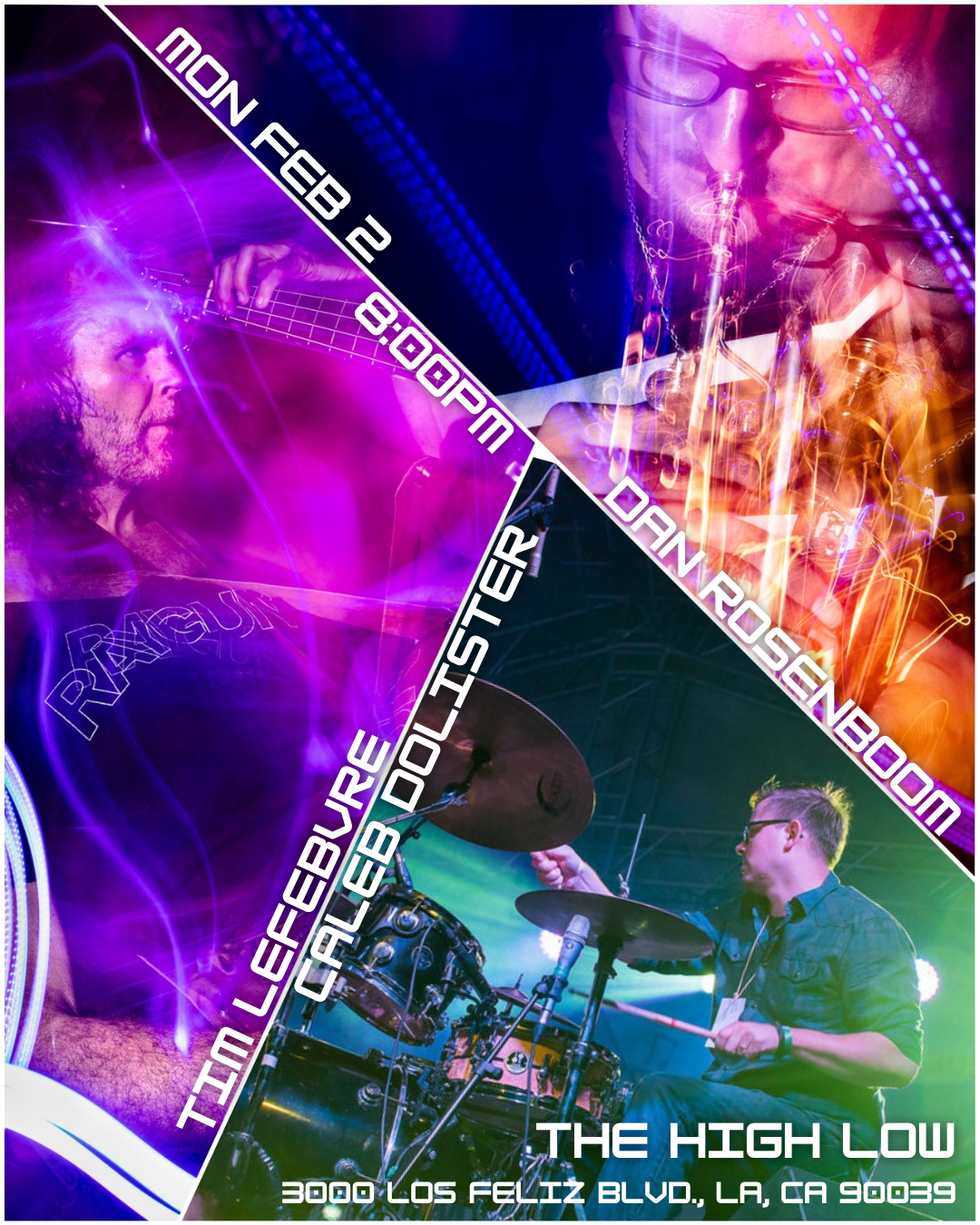
Evidence No 1. — Official bulletin notifying humans of the event.
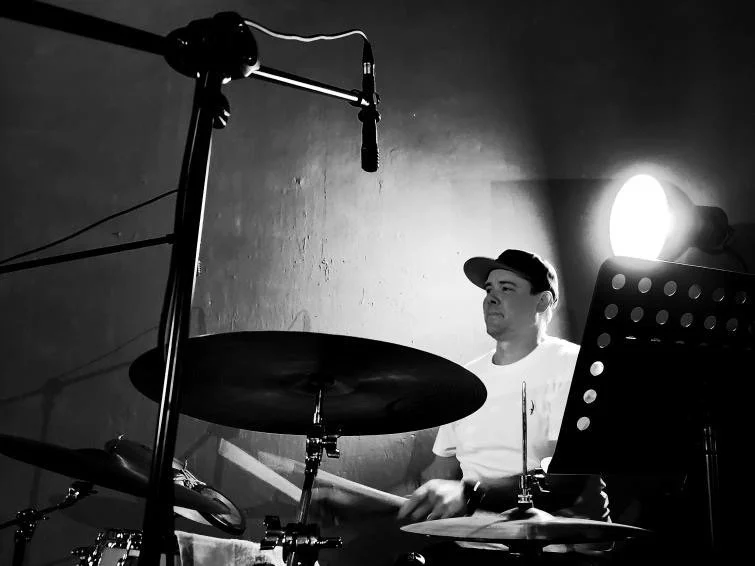
Evidence No. 2 — model cd.drums
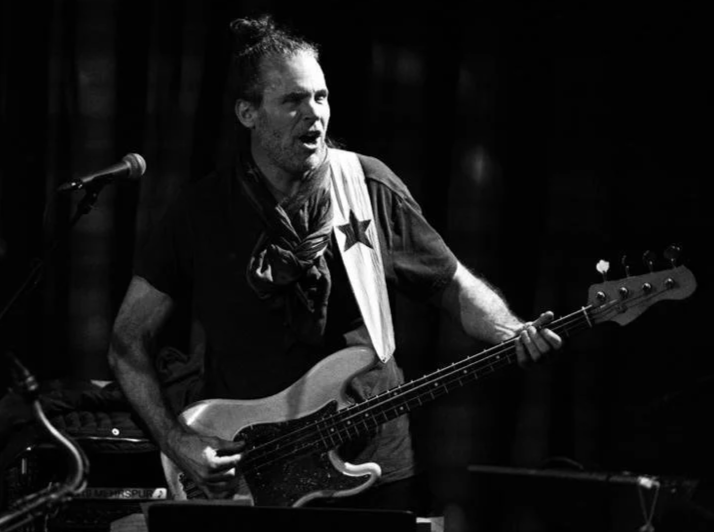
Evidence No. 3 — model Lefebvre-Tim Bass Library
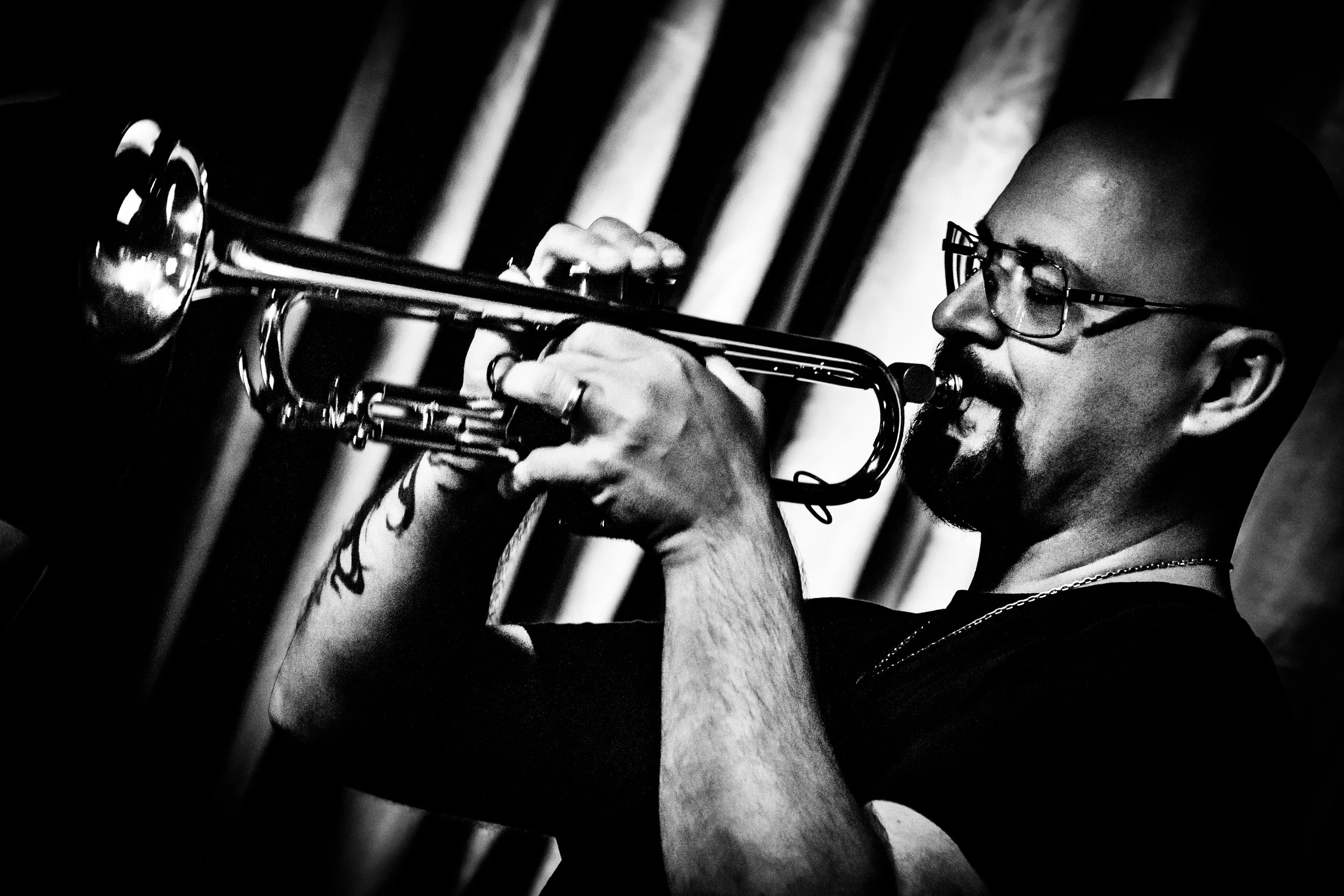
Evidence No. 4 — model Rosenboom-Dan Trumpet Library